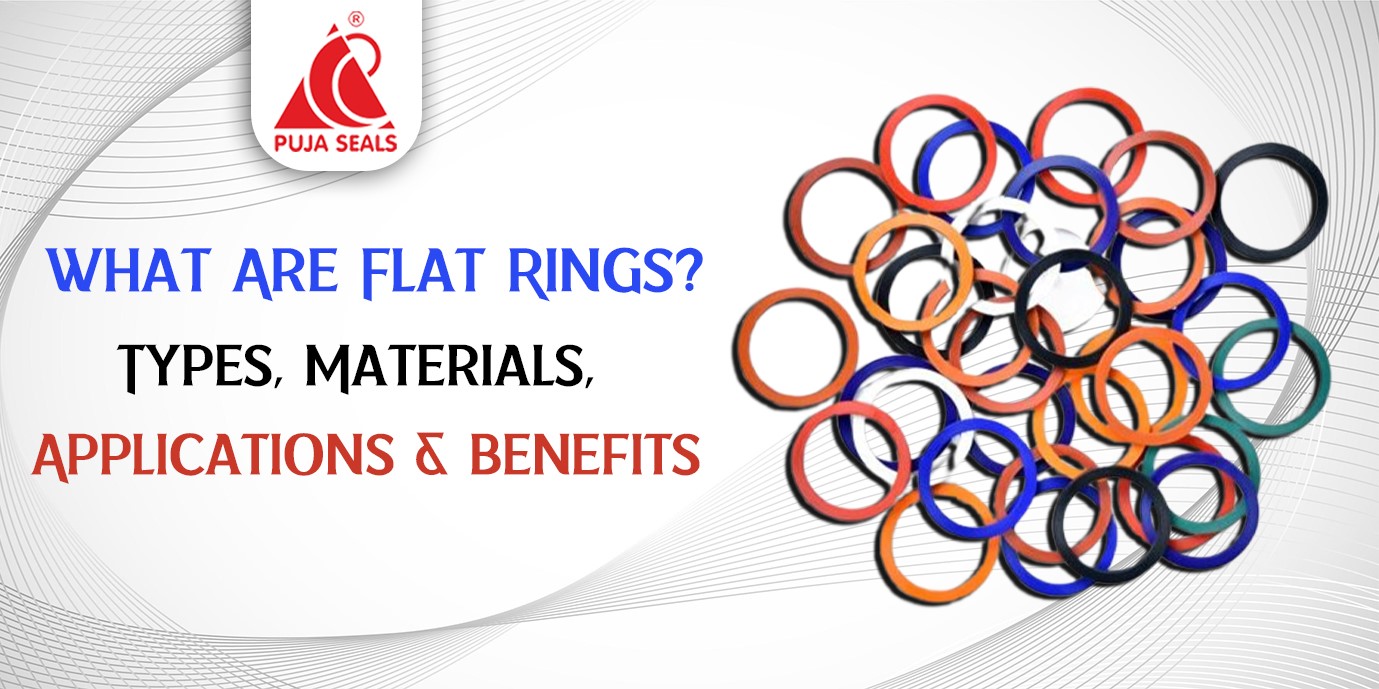
Industrial machinery and equipment rely on dependable sealing components to ensure efficient operation, prevent leaks, and maintain system integrity. Among the many sealing products available, Flat Rings are widely used because of their simple design, durability, and excellent sealing performance. Whether used in hydraulic systems, pipelines, pumps, or industrial machinery, flat rings help improve equipment reliability while reducing maintenance costs.
Understanding the different types, materials, applications, and benefits of flat rings can help industries choose the right sealing solution for their specific requirements. At Puja Seals, we manufacture high-quality sealing products designed to deliver consistent performance across a wide range of industrial applications.
What Are Flat Rings?
Flat rings are circular sealing components with a flat cross-section that create a secure seal between two mating surfaces. Their primary function is to prevent the leakage of liquids, gases, or other substances while maintaining proper pressure within a system.
Unlike some complex sealing solutions, flat rings are easy to install and offer reliable performance in both static and low-movement applications.
Key Benefits- Excellent sealing capability
- Simple yet effective design
- Easy installation
- High durability
- Available in multiple materials
These qualities make flat rings a preferred choice across various industries.
Types of Flat Rings
Different industrial applications require different sealing solutions. Flat rings are available in several types based on material and operating conditions.
- Standard Flat Rings: Designed for general industrial applications where reliable sealing is required.
- High-Temperature Flat Rings: Manufactured using materials capable of withstanding elevated temperatures.
- Chemical-Resistant Flat Rings: Suitable for environments involving aggressive chemicals and corrosive fluids.
- Heavy-Duty Industrial Flat Rings: Built for demanding applications involving high pressure and continuous operation.
Selecting the appropriate type improves both performance and service life.
Materials Used in Flat Rings
Material selection plays a crucial role in determining sealing efficiency and durability.
- Natural Rubber: Offers flexibility and excellent sealing for general-purpose applications.
- Nitrile Rubber: Provides good resistance to oils, fuels, and hydraulic fluids.
- Silicone: Suitable for applications involving extreme temperatures and hygienic environments.
- EPDM: Performs well in outdoor environments due to excellent weather and ozone resistance.
- Neoprene: Offers balanced resistance to weather, chemicals, and abrasion.
The right material should always be selected based on the operating environment and application requirements.
Common Industrial Applications
Flat rings are used in a wide variety of industries because of their versatility.
- Hydraulic Equipment: They help prevent fluid leakage while maintaining system pressure.
- Pumps and Valves: Provide dependable sealing for fluid handling systems.
- Automotive Industry: Used in engine assemblies, fuel systems, and mechanical components.
- Water Treatment Plants: Support leak-free operation in filtration and pumping systems.
- Manufacturing Machinery: Help improve equipment reliability and reduce maintenance downtime.
Their adaptability makes them an essential sealing component across numerous industrial sectors.
Benefits of Using Flat Rings
Choosing high-quality sealing components offers several long-term advantages.
- Reliable Leak Prevention: Proper sealing minimizes fluid and gas leakage.
- Longer Equipment Life: Reduced wear helps extend the lifespan of machinery.
- Lower Maintenance Costs: Reliable seals reduce unexpected repairs and downtime.
- Easy Installation: Simple designs make installation and replacement straightforward.
- Cost-Effective Solution: Flat rings provide dependable sealing without unnecessary complexity.
These benefits contribute to improved productivity and operational efficiency.
How to Select the Right Flat Ring
Before choosing a flat ring, consider several important factors.
- Material Compatibility: Ensure the material is suitable for the operating environment.
- Temperature Range: Verify that the material can withstand expected temperatures.
- Pressure Conditions: Select products designed for the system's operating pressure.
- Chemical Exposure: Check compatibility with oils, fuels, chemicals, or other process fluids.
Proper selection helps maximize sealing performance and product life.
Why Choose Puja Seals
Puja Seals manufactures precision-engineered sealing products that meet the quality demands of modern industries.
Our Advantages- Premium-quality raw materials
- Precision manufacturing processes
- Strict quality control
- Customized sealing solutions
- Reliable industrial expertise
Our commitment to quality ensures dependable sealing performance across diverse industrial applications.
Conclusion
Flat rings are among the most practical and effective sealing solutions used across industrial sectors. Their ability to prevent leakage, withstand demanding operating conditions, and improve equipment reliability makes them an essential component in hydraulic systems, pumps, valves, automotive applications, and manufacturing equipment.
By selecting the appropriate material and working with trusted manufacturers like Puja Seals, industries can achieve better sealing performance, lower maintenance costs, and longer equipment life.
Frequently Asked Questions (FAQs)
Flat rings are used to create leak-proof seals between two mating surfaces in hydraulic systems, pumps, valves, pipelines, and industrial machinery.
Common materials include natural rubber, nitrile, silicone, EPDM, and neoprene, depending on the application.
They provide reliable sealing, easy installation, durability, and help reduce maintenance costs.
Consider operating pressure, temperature, chemical compatibility, and application requirements before selecting a flat ring.
Yes. Rubber Flat Rings are widely used in industrial equipment because they offer excellent sealing performance, flexibility, and long-lasting durability when selected for the appropriate operating conditions.