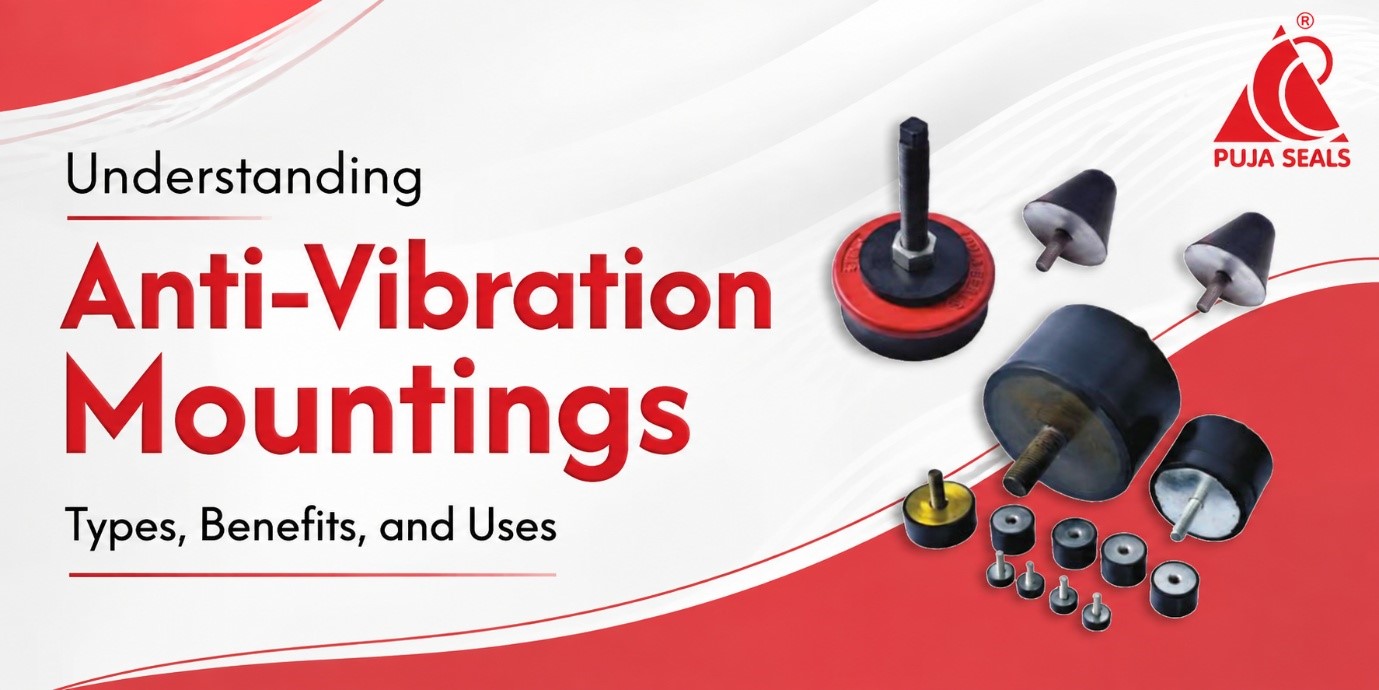
Vibration is a common challenge in industrial machinery, vehicles, generators, and other equipment. Excessive vibration can create noise, loosen components, increase wear, and affect machine performance. A properly selected Anti-Vibration Mount can help control these unwanted movements and protect both machinery and surrounding structures.
Puja Seals we understand the importance of reliable vibration-control solutions for demanding industrial applications. Choosing the right mounting requires consideration of the machine, operating conditions, load, and level of vibration.
What Are Anti-Vibration Mountings?
Anti-vibration mountings are components designed to isolate equipment from unwanted vibration and reduce the transmission of mechanical movement to nearby structures.
They are commonly used beneath or between machinery and supporting surfaces. Depending on their design, they can absorb vibration, reduce noise, and help equipment operate more smoothly.
These mountings are often used in:
- Industrial machinery
- Engines and generators
- Pumps and compressors
- HVAC equipment
- Automotive applications
- Manufacturing equipment
- Electrical equipment
Why Is Vibration Control Important?
Some vibration is unavoidable when machinery operates. However, excessive vibration can create several problems.
- Equipment Wear
Continuous vibration can place additional stress on bearings, fasteners, shafts, housings, and other components. - Noise Reduction
Vibration transferred to floors, frames, and walls can increase unwanted noise. Proper isolation can help create a quieter working environment. - Improved Machine Stability
A suitable mounting system can help keep equipment stable during operation and reduce unwanted movement. - Longer Equipment Life
By reducing mechanical stress and vibration transmission, effective isolation may help reduce premature wear and maintenance requirements.
Types of Anti-Vibration Mountings
Different machines require different mounting solutions. The correct choice depends on load, frequency, operating environment, and equipment design.
-
1.Rubber Mountings
Rubber-based mountings are widely used because they offer flexibility and vibration absorption. They can be suitable for machinery, engines, compressors, and various industrial applications.
2.Rubber-to-Metal Mountings
These mountings combine elastomeric material with metal components to provide support and vibration isolation. They are useful where strength and controlled flexibility are both required.
3.Spring Mountings
Spring-based systems are often selected for equipment producing significant vibration. They can provide effective isolation while supporting heavier loads.
4.Pad Mountings
Vibration isolation pads can be installed beneath equipment to reduce the transfer of vibration to supporting structures. They are commonly used for machinery and equipment foundations.
Key Benefits of Anti-Vibration Mountings
A well-selected mounting can provide several practical advantages.
- Reduced Vibration Transmission
The mounting creates a barrier between the equipment and its supporting structure, helping minimize transmitted vibration. - Better Operating Performance
Reducing excessive movement can help machinery operate more smoothly and consistently. - Lower Maintenance Requirements
Less vibration can reduce stress on connected components and potentially reduce the frequency of maintenance caused by vibration-related wear. - Improved Workplace Comfort
Controlling vibration and associated noise can contribute to a more comfortable industrial or commercial environment.
How to Choose the Right Mounting
Choosing a mounting based only on size or appearance can result in poor performance. Several technical factors should be considered.
- Load Capacity
Determine the total equipment weight and how that load is distributed across the mounting points. - Vibration Frequency
The operating frequency of the equipment plays an important role in selecting an appropriate isolation solution. - Operating Environment
Temperature, oil exposure, chemicals, moisture, dust, and outdoor conditions can affect mounting material and service life. - Installation Conditions
Mounting position, available space, foundation design, and alignment should also be considered before installation.
Working with an experienced Anti-Vibration Mount manufacturer can make it easier to select a solution based on actual operating conditions rather than simply choosing a standard product.
Common Applications
Anti-vibration solutions are used across many industries.
- Industrial Machinery
Machines such as compressors, pumps, presses, and production equipment may benefit from vibration isolation. - Engines and Generators
Mountings can help control movement and vibration generated during engine operation. - HVAC Equipment
Fans, chillers, and other HVAC equipment can transmit vibration through building structures. Suitable isolation can help reduce this transfer. - Automotive Equipment
Engine and equipment mountings can help control vibration while supporting components during operation.
Why Choose Puja Seals?
At Puja Seals, we focus on providing sealing and rubber-based industrial solutions designed around application requirements.
When selecting an Anti-Vibration Mount in pune, customers should consider material quality, load requirements, operating conditions, dimensions, and expected service life.
Our application-focused approach helps customers understand the factors that matter when selecting vibration-control products.
Conclusion
Anti-vibration mountings play an important role in controlling unwanted movement, reducing vibration transmission, and supporting smoother equipment operation. From industrial machinery and generators to HVAC systems and automotive applications, the right mounting can make a meaningful difference.
Before selecting a product, consider load, vibration frequency, environmental conditions, mounting arrangement, and equipment requirements. Professional guidance can help ensure that the selected solution is suitable for the application.
Frequently Asked Questions (FAQs)
Its main purpose is to isolate equipment from unwanted vibration and reduce the amount of mechanical movement transferred to the supporting structure.
Rubber and elastomer-based materials are commonly used because they can provide flexibility and vibration isolation. The ideal material depends on the application.
They can help reduce structure-borne vibration, which may also reduce noise caused by vibration being transferred through floors, frames, or other structures.
Consider equipment weight, load distribution, operating frequency, temperature, chemical exposure, mounting position, and environmental conditions.
Yes, suitable mounting systems can be designed for heavy equipment. The mounting must be selected according to the machine's load and operating characteristics.