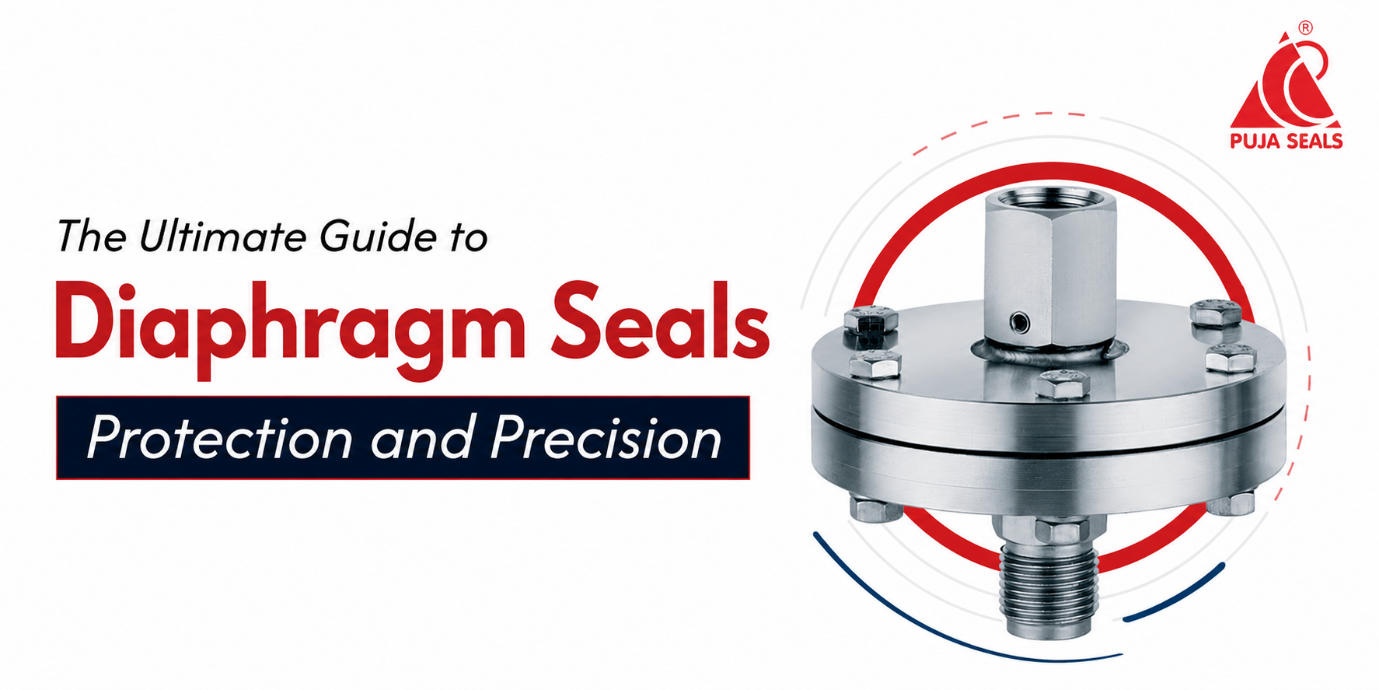
In industrial systems, even a small sealing failure can lead to leakage, contamination, equipment damage, and unexpected downtime. That is why choosing the right sealing solution matters. Puja Seals provides sealing solutions designed to support reliable performance across demanding industrial applications. Among these solutions, Diaphragm Seals are valued for their ability to protect sensitive components while maintaining accurate and dependable operation.
What Are Diaphragm Seals?
A diaphragm seal is a flexible sealing component that creates a barrier between process media and sensitive measuring or mechanical components. It can help prevent direct contact with pressure-sensitive instruments, corrosive substances, dust, moisture, or other challenging environments.
The diaphragm moves or flexes in response to pressure changes while maintaining separation between the process medium and the protected component. This makes the design useful in applications where cleanliness, precision, and protection are important.
Why Are Diaphragm Seals Important?
-
Protection From Harsh Conditions
Industrial equipment may operate around chemicals, high temperatures, pressure, dust, or abrasive materials. A properly selected diaphragm can provide an additional protective barrier and help reduce the impact of these conditions on connected components.
-
Improved Measurement Reliability
In pressure measurement applications, process media can sometimes damage or interfere with sensitive instruments. A diaphragm seal helps isolate the measuring element while allowing pressure to be transferred effectively.
-
Reduced Contamination
Keeping process fluids and measuring instruments separated can be especially important in industries where contamination must be controlled. The right sealing arrangement can help maintain cleaner and more reliable operations.
Common Applications of Diaphragm Seals
Diaphragm seals are used across a wide range of industrial environments. They can be found in chemical processing, pharmaceutical equipment, food processing, oil and gas systems, water treatment, and general manufacturing.
Their application depends on factors such as pressure, temperature, media compatibility, operating conditions, and equipment design. Working with experienced diaphragm seals manufacturers can help businesses select a suitable solution for their specific requirements.
How to Choose the Right Diaphragm Seal
-
Consider the Operating Environment
Start by understanding the temperature, pressure, and type of media involved. These factors directly influence the material and design required.
-
Check Material Compatibility
The seal material should be compatible with the process medium. Choosing an unsuitable material can result in premature wear, swelling, cracking, or reduced sealing performance.
-
Focus on Application Requirements
Different industries and machines have different sealing needs. Dimensions, flexibility, pressure requirements, installation conditions, and expected service life should all be considered before making a selection.
Why Choose Puja Seals?
Selecting a reliable sealing partner is just as important as selecting the right product. Puja Seals focuses on manufacturing sealing solutions for industrial requirements, with attention to quality, application needs, and consistent performance
For businesses comparing diaphragm seals manufacturers, evaluating product quality, material options, manufacturing capabilities, and technical support can make the selection process easier and more reliable.
Frequently Asked Questions (FAQs)
Its primary purpose is to isolate sensitive components or instruments from process media while allowing pressure or movement to be transferred effectively.
They are commonly used in chemical, pharmaceutical, food processing, oil and gas, water treatment, and other industrial applications.
Service life depends on material, temperature, pressure, chemical exposure, operating conditions, and installation. Proper selection can significantly improve durability.
Yes. Depending on the application, specifications such as material, dimensions, design, and operating requirements may be considered for a suitable sealing solution.
Consider the process media, operating pressure, temperature, material compatibility, dimensions, and installation conditions to ensure the seal suits the application.