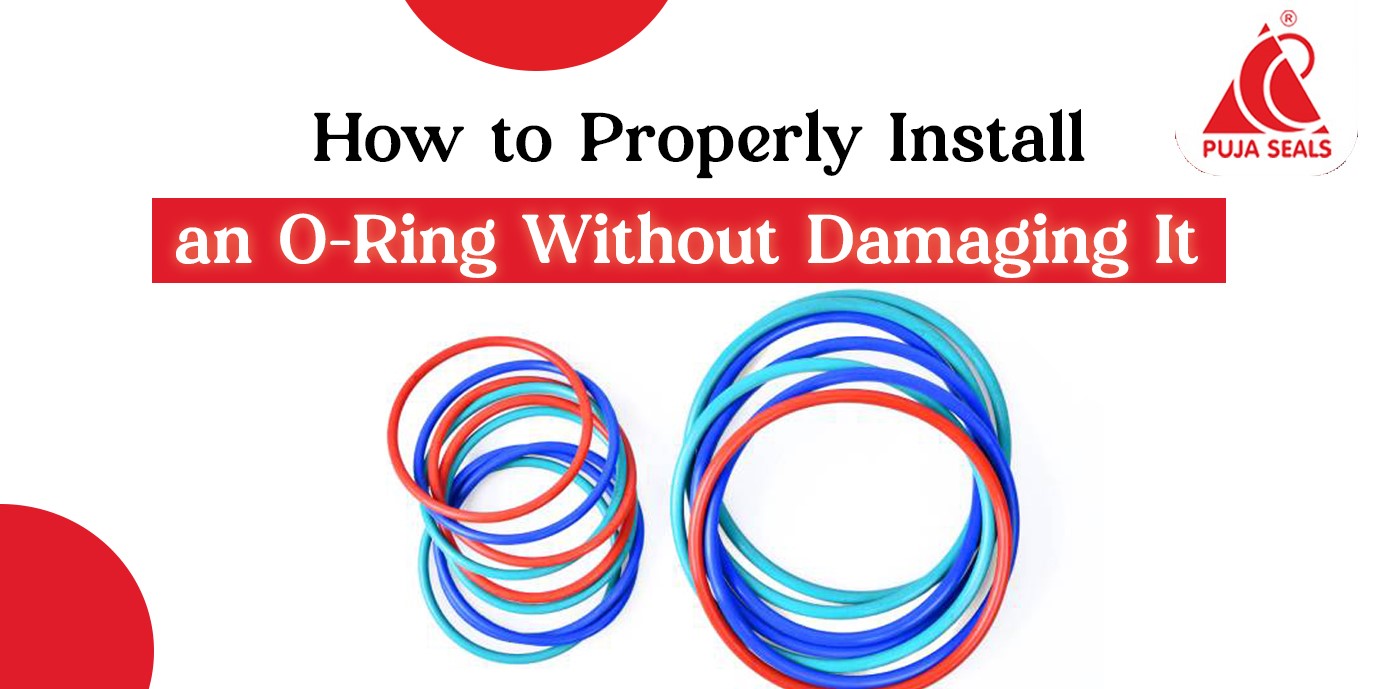
An O-ring may be a small component, but it plays an important role in preventing leaks and maintaining reliable sealing in industrial equipment. Incorrect installation can cause cuts, stretching, twisting, or compression damage, which may lead to leakage and unexpected equipment downtime.
Whether you are working with hydraulic systems, pneumatic equipment, pumps, or industrial machinery, knowing how to install an O-Ring correctly can improve sealing performance and extend its service life. At Puja Seals, we understand the importance of choosing suitable sealing components and handling them properly during installation.
Why Proper O-Ring Installation Matters
An O-ring creates a seal by compressing between two mating surfaces. For it to work effectively, it must fit correctly without being damaged during assembly.
Even a small scratch, cut, or twist can affect its ability to prevent fluid or gas leakage. Incorrect installation may also result in premature wear, repeated maintenance, and unnecessary replacement costs.
Following the correct installation process helps maintain seal integrity and supports the reliable operation of industrial equipment.
Steps to Install an O-Ring Correctly
1. Inspect the O-Ring Before Installation
Before starting, check the seal for visible cuts, cracks, deformation, contamination, or other defects. Avoid using damaged or improperly stored seals, as they may not provide reliable performance.
Also, confirm that the seal material and dimensions are suitable for the application, including its operating temperature, pressure, and chemical exposure.
2. Clean the Groove and Contact Surfaces
Dirt, metal particles, old sealant, and sharp edges can damage the seal during installation. Clean the groove and surrounding surfaces thoroughly before fitting the component.
Check for burrs, scratches, and sharp corners. If any surface defects are present, they should be addressed before assembly.
3. Use a Compatible Lubricant
Where recommended for the application, apply a thin layer of compatible lubricant to help the seal slide into position without excessive friction.
Always check compatibility with the seal material and the operating medium. An unsuitable lubricant can cause swelling, deterioration, or loss of sealing performance.
4. Avoid Twisting or Stretching
Carefully position the seal in its groove. Do not pull it excessively or twist it while fitting. Twisting can create uneven compression and increase the risk of leakage.
For assemblies with threads, sharp edges, or narrow openings, use an appropriate installation sleeve or protective tool where necessary.
5. Assemble the Components Carefully
Bring the mating parts together slowly and evenly. Avoid forcing components into place, as excessive pressure can pinch, cut, or dislodge the seal.
Once assembled, follow the equipment manufacturer's recommended procedures for tightening, testing, and commissioning.
Common Installation Mistakes to Avoid
Some common mistakes include using the wrong seal size, ignoring surface damage, applying incompatible lubricants, stretching the seal excessively, and reusing a damaged component.
Selecting products from experienced o rings manufacturers can help you identify suitable sealing options for your application. However, correct material selection, proper installation, and regular inspection remain essential for dependable performance.
How to Improve O-Ring Service Life
Proper maintenance begins with selecting the correct seal for the working conditions. Store seals away from direct sunlight, excessive heat, contamination, and other conditions that may cause premature ageing.
Inspect seals during scheduled maintenance and replace them when signs of damage or deterioration appear. At Puja Seals, we recognize that reliable sealing depends on both product quality and correct handling throughout the installation process.
When evaluating o rings manufacturers, consider material options, dimensional accuracy, application requirements, and the technical guidance available to support your sealing needs.
Conclusion
Correct installation is essential for achieving reliable sealing performance. By inspecting the seal, cleaning the groove, using compatible lubrication, avoiding twisting, and assembling components carefully, you can reduce installation-related damage and help prevent premature failure.
A properly selected and correctly installed O-Ring can contribute to equipment efficiency, reduced leakage, and more dependable industrial operations.
Frequently Asked Questions
Damage can occur due to sharp edges, excessive stretching, twisting, dirt, incorrect sizing, or unsuitable installation tools.
Lubrication may help reduce friction, but only use a lubricant compatible with the seal material and the application.
It is generally best to replace a seal with visible cuts, cracks, permanent deformation, or other damage rather than risk leakage.
Consider operating temperature, pressure, the fluid or gas involved, chemical compatibility, and the equipment manufacturer's specifications.
Look for consistent product quality, suitable material and size options, dimensional accuracy, and guidance for your specific application.