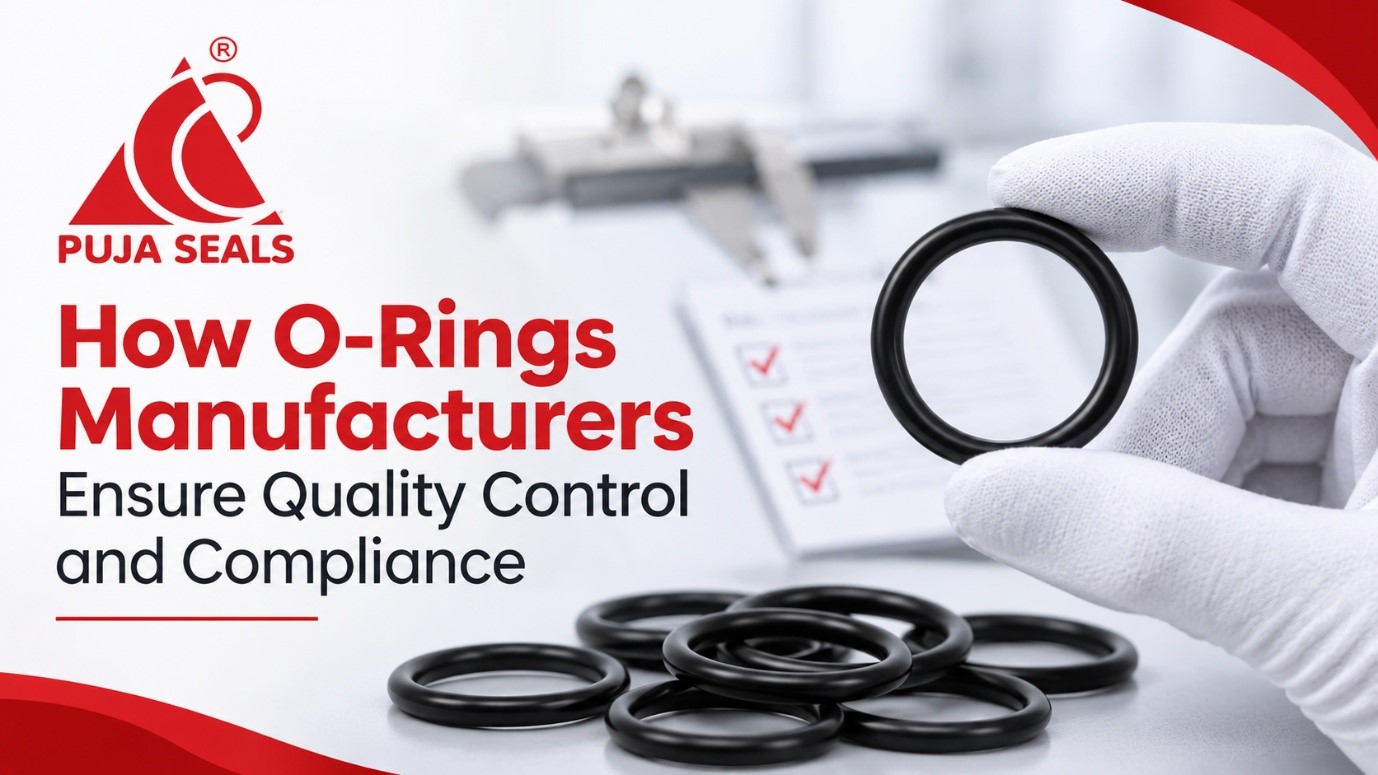
In industrial applications, even a small sealing component can make a big difference to equipment performance. O-rings are widely used in hydraulic systems, pumps, automotive components, pneumatic equipment, and various types of machinery. Their ability to prevent fluid and gas leakage makes quality an important consideration.
But how can businesses ensure that the seals they purchase meet the required standards? The answer lies in proper manufacturing processes, material selection, inspection, and quality control. Reliable O-Rings Manufacturers follow systematic procedures to maintain product consistency and ensure that sealing components meet application requirements.
At Puja Seals, we understand the importance of dependable sealing solutions and the role that product quality plays in industrial operations.
Why Quality Control Matters in O-Ring Manufacturing
An O-ring may look simple, but its performance depends on several factors, including material properties, dimensions, surface finish, and operating conditions.
A poorly manufactured seal may cause leakage, equipment downtime, frequent replacements, and increased maintenance costs. Quality control helps identify defects before products reach customers and supports consistent performance across manufacturing batches.
How Manufacturers Maintain Quality Standards
1. Selecting the Right Raw Materials
Quality begins with the selection of suitable raw materials. Different applications require different elastomer materials depending on temperature, pressure, chemical exposure, and the type of fluid being sealed.
Common materials include Nitrile (NBR), Silicone, EPDM, and Fluoroelastomer (FKM). Each material has its own characteristics and application suitability.
Manufacturers must evaluate material specifications carefully to ensure that the selected compound matches the intended operating environment.
2. Maintaining Accurate Dimensions
Correct dimensions are essential for effective sealing. The inside diameter and cross-sectional thickness must meet the required specifications.
Even minor dimensional variations can affect compression and sealing performance. Manufacturers use suitable measuring instruments and inspection methods to verify product dimensions during production.
3. Monitoring the Manufacturing Process
Manufacturing conditions can influence the final quality of a seal. Factors such as mould design, temperature, pressure, curing time, and finishing need to be controlled according to the material and production requirements.
Regular process monitoring helps reduce defects and maintain consistency between batches.
4. Conducting Quality Inspections and Testing
Inspection helps identify visible and dimensional defects before dispatch. Depending on the product and application, testing may include:
- Dimensional inspection
- Visual surface inspection
- Hardness testing
- Tensile strength evaluation
- Compression set testing
- Material verification
These checks help assess whether the finished product meets the specified requirements.
Understanding Compliance and Industry Standards
Compliance is another important part of industrial sealing production. Applicable standards and customer specifications help define requirements for materials, dimensions, testing, and product performance.
However, not every standard applies to every seal. The correct requirements depend on the intended application, industry, and customer's technical specifications.
When evaluating O-Rings Manufacturers, businesses should review relevant quality certifications, inspection procedures, product documentation, and the manufacturer's ability to meet application-specific requirements.
Why Choosing a Quality-Focused Manufacturer Matters
Selecting a manufacturer involves more than comparing prices. Businesses should consider material options, dimensional accuracy, production consistency, technical support, and quality documentation.
Experienced manufacturers understand that different industries have different sealing requirements. A seal designed for an automotive application may not necessarily be suitable for a chemical processing system.
At Puja Seals, we recognize the importance of reliable sealing components in industrial applications. Our focus on manufacturing quality and understanding customer requirements supports businesses looking for suitable sealing solutions.
Conclusion
Quality control is not a single inspection step. It is a continuous process that begins with raw material selection and continues through production, testing, and final inspection.
For businesses using o rings in critical equipment, choosing products that meet the required specifications can help reduce leakage risks and support dependable operations. Working with a quality-focused manufacturer is an important step towards achieving consistent sealing performance.
Frequently Asked Questions
It helps identify material, dimensional, and surface defects, supporting consistent product quality and reliable sealing performance.
Common materials include NBR, Silicone, EPDM, and FKM. The suitable choice depends on temperature, pressure, and chemical compatibility.
Depending on the application, inspections may include dimensional checks, visual examination, hardness testing, tensile testing, and compression set evaluation.
No. Applicable requirements depend on the application, industry, material, and customer specifications.
They should review manufacturing capabilities, material options, quality certifications, inspection methods, technical support, and product specifications.